The power of standards-based grading

Standards-based grading is a powerful way to make learning the most important outcome ― empowering students to own their learning, ensuring that instruction is relevant, and inviting families to support along the way.

What is standards-based grading?

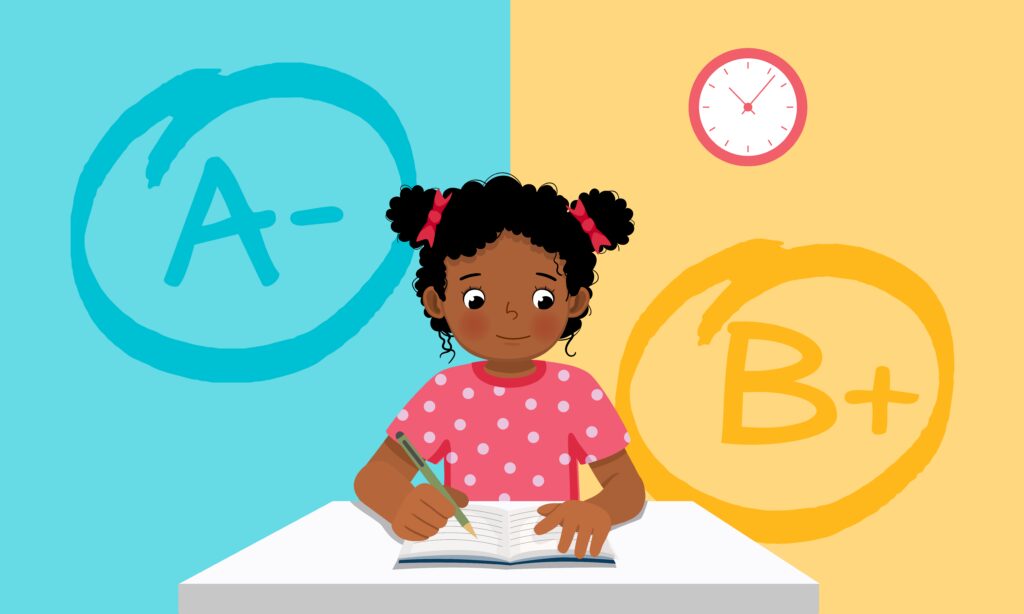
A traditional approach communicates summative achievement ― as well as participation, effort, and extra credit ― with a single percentage or letter grade. This approach values the completion of work more than learning.

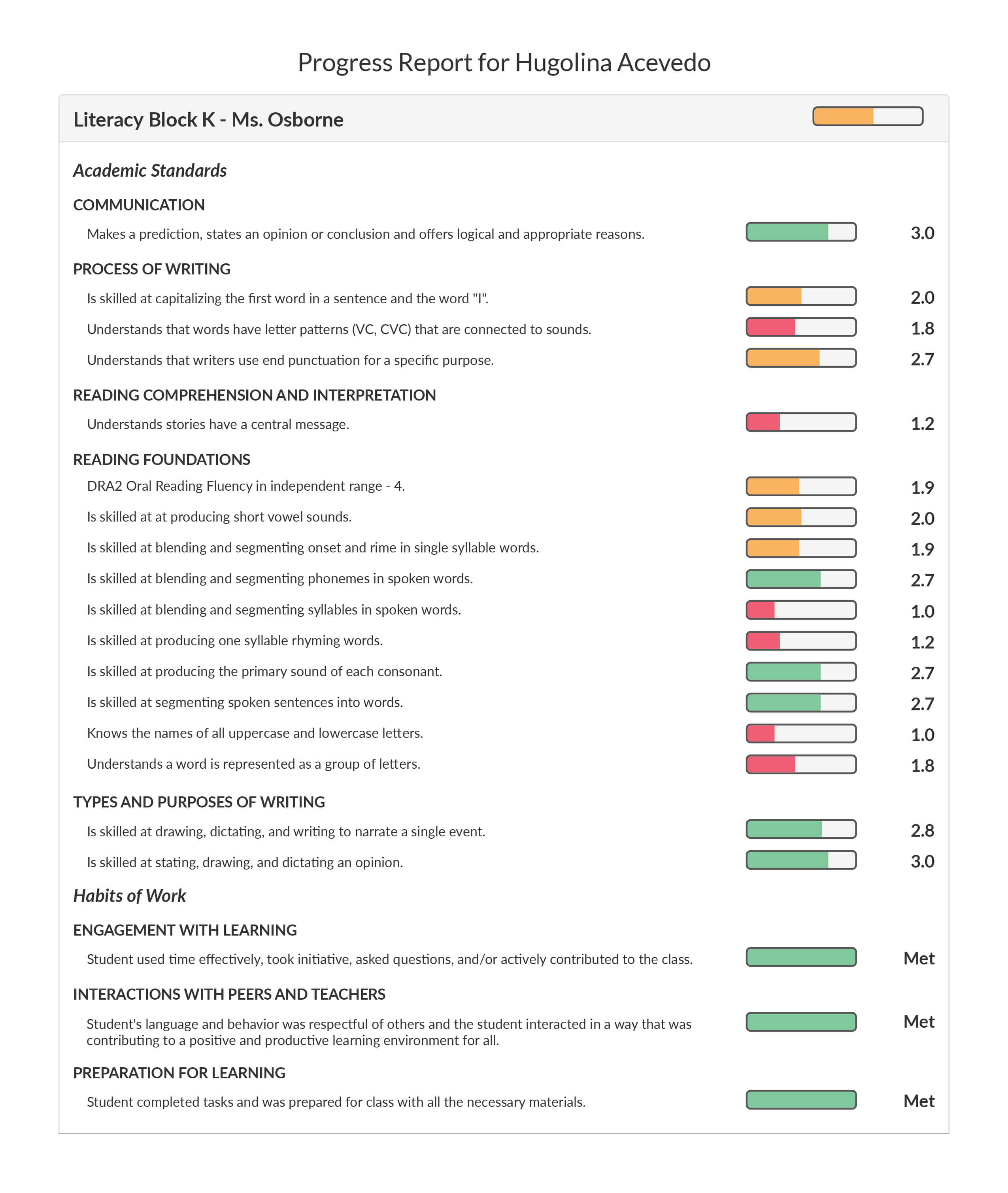
Standards-based grading is a system for measuring and reporting students’ progress toward mastering learning goals. It involves examining evidence of multiple standards over time to determine what students have learned and what they still need to learn.

Progress Report for Hugolina Acevedo 2022-11-29 20-37 crop

Standards-based grading isn’t just good practice ― it’s grounded in neuroscience

Standards-based grading supports the way students’ brains are wired to create the best conditions for learning. Ready for a quick primer on the human brain?

The brain has two primary survival mechanisms: to seek patterns and to seek pleasure.

Seeking Patterns

When presented with unexpected sensory input — such as unfamiliar questions — the brain rapidly scans stored memories to find one that matches the new information. The brain uses patterns like these to make predictions and decide how to act.

Seeking Pleasure

When the brain makes an accurate prediction and acts in a way that gets the desired result, dopamine is released ― promoting a sense of pleasure and satisfaction. The brain finds this so pleasurable that it remembers the actions that caused this response and seeks opportunities to repeat them. As the brain pursues this goal, it results in better attention, motivation, curiosity, perseverance, and memory.

JR_Brain-animation_v02

Standards-based grading satisfies the brain’s desire to seek patterns and pleasure.

JRBrain

When a student knows what it looks like to succeed ― through success criteria and mastery levels, for example ― the brain is more likely to make accurate predictions and act in a way that gets the desired result.

JRBubbles

When a student receives specific, actionable feedback along the way, they are more likely to succeed, which makes their brain release dopamine and motivates the student to continue working hard.

JRHands

In this process, the brain creates new stored memories of what it took to succeed. This means that an unfamiliar question or a challenging assignment isn’t as scary next time because the brain knows what it needs to do. Over time, this results in learning and success.

[Source: Upgrade Your Teaching: Understanding By Design Meets Neuroscience by Jay McTighe and Judy Willis, MD]

Does your gradebook support your practice? It should.

When your tools support your practice, your work gets easier, your students get more of your time and attention, and your entire standards-based implementation gets stronger.

You shouldn’t have to wrestle with a traditional gradebook to try to get it to report on standards ― it was not designed to do that and will never do it well.

Standards-based grading helps ensure that all students learn, grow into self-motivated learners, and succeed. And isn’t that what we’re all working toward?

JumpRope is a standards-based gradebook that helps connect teaching practice with learning standards, making it easier for teachers to implement standards-based teaching practices. For example, JumpRope helps teachers provide descriptive feedback on the standards. And JumpRope makes it easy for students and families to view progress online at any time.

Standards-based grading helps ensure that all students learn, grow into self-motivated learners, and succeed. And isn’t that what we’re all working toward?

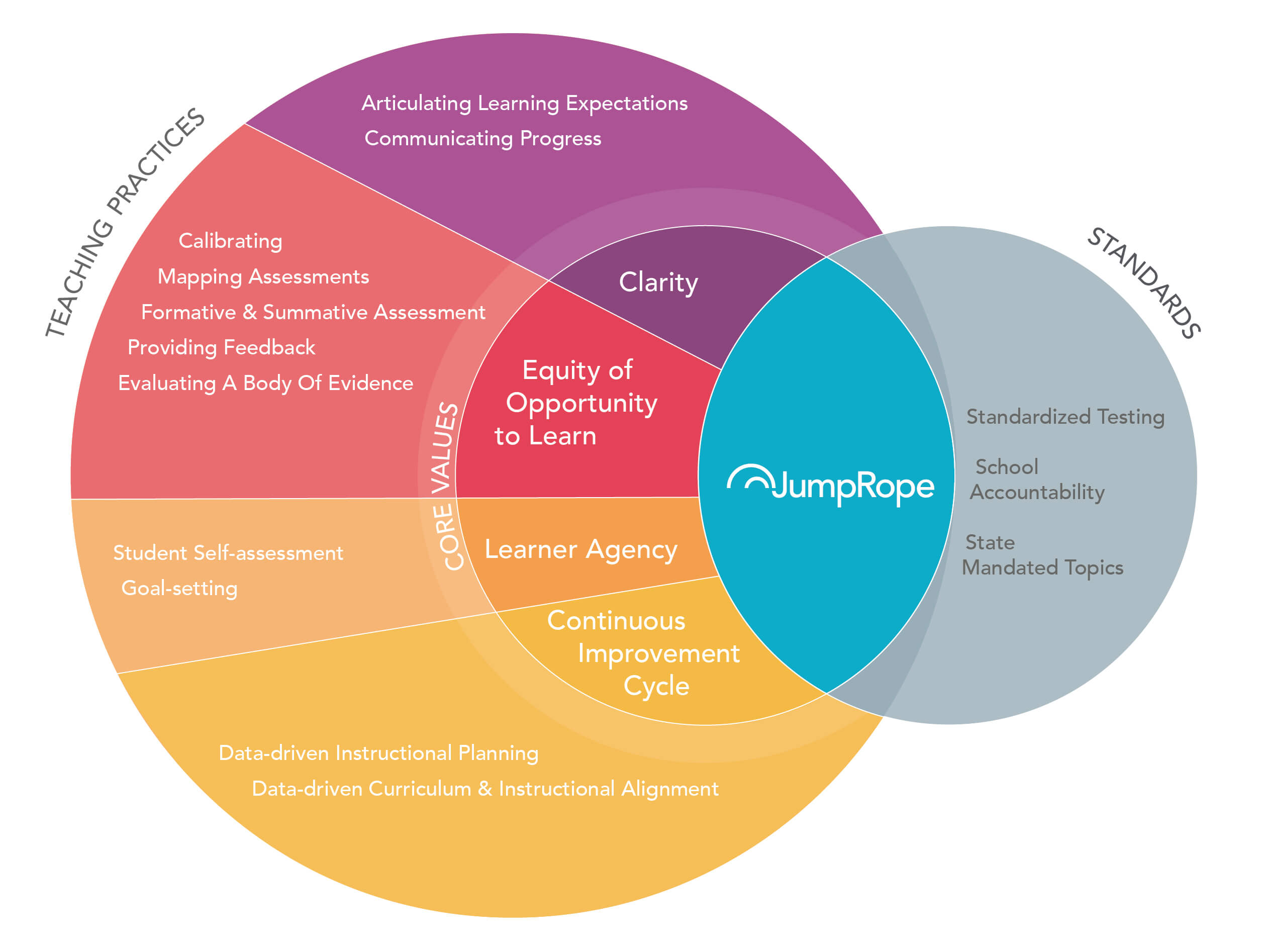
JR_Venn-Diagram_v07

What does strong standards-based teaching practice look like?

At JumpRope, we believe that the best way to increase student learning is to strengthen each teacher's professional practice. That's why our software is designed to support teachers in implementing effective standards-based teaching practices.

In fact, we care so much about staying grounded in what works in classrooms that we even derived our company's Core Values — which guide every aspect of our work from the way the software is designed to the new features we add — directly from strong standards-based teaching practices and the deeply meaningful outcomes these create for students.

The core values that guide us

clarity

Clarity

We believe that students can achieve anything if they know what their learning goal is, how they are doing along the way, what they need to do next, and how they will be assessed.

That’s why JumpRope takes every single student score, applies one of several calculation methods, and turns the scores into visual, easy-to-use progress reports so that students — and their families — can clearly see which standards they've mastered and which they still need to work on.

equityofopportunity

Equity of Opportunity to Learn

We believe that all students deserve sufficient opportunity to acquire skills and knowledge.

That’s why JumpRope gives teachers the insights they need to determine how to differentiate their instruction and makes it easy to give students multiple opportunities to demonstrate learning.

learneragency

Learner Agency

We believe that the ability to set goals and self-assess empowers students to become self-motivated learners.

That’s why JumpRope helps teachers get clear on the learning progression and give descriptive feedback ― modeling what students ultimately need to be able to do for themselves.

continuousimprovement

Continuous Improvement

We believe that schools need to engage in a cycle of continuous improvement to ensure that curriculum and instruction truly meet students’ and society’s needs.

That’s one reason why JumpRope reports are so valuable: they help teachers monitor students’ progress over time and analyze the effectiveness of curricula and instructional decisions.

Browse Our Library of Core Value Resources

Clarity

Core Value

Clarity

We believe that students can achieve anything if they know what their learning goal is, how they are doing along the way, what they need to do next, and how they will be assessed.

CoreValues_Clarity@2x

Teaching Practice

Articulating learning expectations

  • Unpack the standards
  • Share learning expectations

Communicating progress toward meeting learning expectations

  • Conduct formative assessments to monitor student progress during the learning process and communicate with students what they can do and what they need to work on
  • Conduct summative assessments to determine whether students have achieved mastery of the articulated learning expectations
  • Report progress on the articulated learning expectations to parents and students in an ongoing or periodic fashion
5-sbg-tips-for-new-teachers

Standards-Based Grading for New Teachers: 5 Bonus Tips

Build on your SBG foundation with five advanced grading tips for new teachers—focused on fairness, clarity, and communication with students and families.
10tips-sbg-for-new-teachers

Standards-Based Grading for New Teachers: 10 Essential Tips

New to standards-based grading? This guide for teachers explains the why, the how, and the key steps to start strong in your classroom.
Redefine Student Success

How Standards-Based Assessment Redefines Student Success

Redefine student success with standards-based assessment. Explore how clarity, agency, and equity boost engagement and achievement.
Illustration of implementing standards-based grading

Goals to Aim for When Shifting to Standards-Based Assessing and Reporting

Explore essential goals for implementing standards-based assessing and reporting. Learn how to build trust, communicate the “why,” and create clarity.
what to avoid when transitioning to standards-based grading

5 Mistakes to Avoid When Shifting to Standards-Based Grading

Explore the inconsistencies in standards-based grading systems and their impact on transparency, equity, and assessment practices...
Rubrics when to use hero image

When might you use each type of rubric?

This blog post aims to build on the last, delineating further when you might choose to use each type of rubric...
Rubrics hero image with grading framework graphic

What is a Rubric?

Rubrics give students a clear path to effective demonstration of learning, and they give teachers a clear path...
Teachers defining what it means to exceed a standard

Defining “Exceeds” the Standard in a Mastery-based Grading System

What does it look like when a student moves beyond mastery in a mastery-based grading system?...
Defining mastery hero image

Defining What Mastery Means in a Mastery-Based Grading System

Explore why and how we should clearly define a 4 in a 1-4 assessment system to guide...
Learning Expectations JumpRope

Practice-Software Tip #1: Articulating Learning Expectations

In a standards-based system, assessments are done at the indicator level. However...
Blog header image with abstract design

Figuring Out Learning Expectations

At JumpRope and in the field of education in general, we talk a lot about transparency.
Blog header image with abstract background

Student Self-Assessment

We don’t have to look far in John Hattie’s list of 150 influences on achievement to find...

Equity of Opportunity to Learn

Core Value

Equity of Opportunity to Learn

We believe that all students deserve sufficient opportunity to acquire skills and knowledge.

CoreValues_EoOtL@2x

Teaching Practice

Using varied instructional strategies

  • Align strategies to expected outcomes
  • Align strategies to students’ needs

Calibrating

  • Establish validity
  • Establish reliability
  • Collaborate with colleagues

Mapping assessments

  • Plan for both formative and summative assessments
  • Decide when, where, and how often

Providing feedback

  • Provide specific feedback
  • Provide actionable feedback

Evaluating a body of evidence

  • Plan for multiple pieces of evidence of learning
  • Disaggregate scores by target/indicator
  • Honor the level of mastery a student is ultimately able to achieve
  • Redos and retakes
How and why to use proficiency scales

Proficiency Scales: WHY and HOW to Use them

Learn why proficiency scales enhance clarity, feedback, and student agency in standards-based classrooms, and explore practical ways to use them to support learning.
Inconsistency Within Standards-based Grading Systems

Inconsistency Within Standards-based Grading Systems

Explore the inconsistencies in standards-based grading systems and their impact on transparency, equity, and assessment practices...
Inconsistent grading system hero illustration

Inconsistency Within Traditional Grading Systems

What should constitute a grade? Why should we spend time thinking about this question? I recently wrote a brief comparison...
Traditional vs standards-based grading hero image

Traditional and Standards-Based Grading Systems

In teaching Planning and Assessment at the University of Southern Maine, one of the discussions I engage in with my students...
Rubrics when to use hero image

When might you use each type of rubric?

This blog post aims to build on the last, delineating further when you might choose to use each type of rubric...
Rubrics hero image with grading framework graphic

What is a Rubric?

Rubrics give students a clear path to effective demonstration of learning, and they give teachers a clear path...
Late and missing work hero image

Late and Missing Work in a Standards-Based Grading System

A common source of struggle for all teachers, and perhaps particularly those who operate in a standards-based system, is...
Teachers defining what it means to exceed a standard

Defining “Exceeds” the Standard in a Mastery-based Grading System

What does it look like when a student moves beyond mastery in a mastery-based grading system?...
Defining mastery hero image

Defining What Mastery Means in a Mastery-Based Grading System

Explore why and how we should clearly define a 4 in a 1-4 assessment system to guide...
Feedback hero image with classroom scene

Practice-Software Tip #5: Providing Feedback

Of the 150 influences on achievement John Hattie notes in Visible Learning for Teachers, feedback ranks tenth...
Practice-Software Tip #4: Formative and Summative Assessments

Practice-Software Tip #4: Formative and Summative Assessments

Building assessment into our daily and weekly plans allows us to collect data that informs...
Assessment hero image with students and teacher

Practice-Software Tip #3: Mapping Assessments

An assessment map is a tool to help with big-picture planning...
Calibration and collaboration hero image

Calibration Through Collaboration

True calibration doesn’t happen in one planning period, and it doesn’t happen in isolation...
Conceptual illustration of people in computer chat software, speech bubble, coffee cup on desk.

Collaboration

Teacher collaboration is an essential tool in working toward equitable assessment across a school or district.
Geometric image of pencils

Reliability

Most of the time when we hear the term “validity” with respect to assessment, it’s coupled with the term “reliability”.
Conceptual image representing validity

Validity

Have you ever read through a stack of student assessments and realized that one or more of the questions...
JumpRope refresh hero image

Building Effective Rubrics for Standards-Based Grading

The first step I take in writing a rubric is determining what the students are meant to learn...
Conceptual ilustration that indicates the idea of mapping

Assessment Mapping

Many of us know from years of studying backward design and turning...
Conceptual illustration of person two people with talk bubbles.

Providing Feedback

It can be challenging to plan for large groups of students and also consider the needs of each student.
Image of paper airplane being formed from ball of paper

Classroom Assessment

As teachers, we know that our antennae are always attuned to how well our students are doing.
Blog header image with abstract classroom theme

Meeting the Range of Students’ Needs

The bedrock of effective instruction and assessment is the knowledge we have of our content...
Blog header image with abstract graphic

Matching Instructional Strategies to Learning Goals

As teachers, we get excited about the things we learn, new ideas we're exposed to...
Conceptual illustration that represents our 4 Core Values

JumpRope Core Values

An overview of the values and beliefs that guide everything we do at JumpRope.
Conceptual Illustration

Most Recent, Power Law, and the Decaying Average

One of the trickiest and most controversial aspects of mastery-based grading is the way that...

Learner Agency

Core Value

Learner Agency

We believe that the ability to set goals and self-assess empowers students to become self-motivated learners.

CoreValues_LearnerAgency@2x

Teaching Practice

Encouraging student self-assessment

  • Provide a structure
  • Provide tools

Supporting student goal-setting

  • Model by providing feedback
  • Provide means for tracking progress
Self-assessment hero image with mastery graphic

Practice-Software Tip #6: Encouraging Student Self-Assessment and Goal-Setting

The combination of offering feedback to students and helping them set goals...
This post on student goal setting provides some context and a research base for why we should support our students in setting goals.

Practice-Software Tip #2: Data and Goal Setting for Students

We’ve learned through decades of research that supporting students in effective goal-setting increases...
Blog header image with abstract background

Student Self-Assessment

We don’t have to look far in John Hattie’s list of 150 influences on achievement to find...
Conceptual image that supports the idea of goal setting.

Student Goal-Setting

Student goal setting is one of the most powerful tools I have built into my practice.
Conceptual illustration that represents our 4 Core Values

JumpRope Core Values

An overview of the values and beliefs that guide everything we do at JumpRope.

Continuous Improvement Cycle

Core Value

Continuous Improvement Cycle

We believe that schools need to engage in a cycle of continuous improvement to ensure that curriculum and instruction truly meet students’ and society’s needs.

CoreValues_CIC@2x

Teaching Practice

Data-driven instructional planning

  • Review past data of current students to plan
  • Review student progress data to plan additional supports for students

Data-based curriculum and instruction alignment

  • Review assessment data for each learning outcome to reflect on instruction
  • Review assessment data by expectation to consider alignment, verticality and trend in performance
what to avoid when transitioning to standards-based grading

5 Mistakes to Avoid When Shifting to Standards-Based Grading

Explore the inconsistencies in standards-based grading systems and their impact on transparency, equity, and assessment practices...
Collaboration hero image with team discussion

Practice-Software Tip #9: Collaboration and Calibration

Collaboration helps us do our best work to improve student learning, and more importantly, it allows us...
Data to improve instruction hero image

Practice-Software Tip #8: Using Data to Improve Instruction

The blog post “Using Data to Revise Plans” addresses data at several levels, including the classroom level.
Becky BWSQ profile photo

Practice-Software Tip #7: Using Data to Differentiate Instruction

It’s useful for teachers to spend time examining assignments students have submitted to note trends they see and consider strategies to address them.
Combining mastery data hero image

Combining Mastery Data and Curriculum Alignment Data to Drive Student Achievement

Becky Brown, EdD and Eduplanet21 dive into why you need a holistic way to look at both curriculum alignment and classroom performance.
Young Women LSA Aurora article header image

Learning is now a “two-way relationship” between teachers and students

At The Young Women’s Leadership School of Astoria JumpRope has helped teachers record student progress on outcomes.
Vancouver iTech Aurora article header image

Students are willing to take risks while learning without worrying about their grades

At Vancouver iTech Preparatory JumpRope has made it possible for teachers to record and communicate student progress on individual standards.
Illustration of a rocket ship taking off from a laptop

Supporting Teacher Practice with School-Level Data

As a building administrator, and then later as a district curriculum coordinator, I was always looking at data.…


An illustration of a knotted up light bulb cord becoming untangled

Using Data to Revise Plans

When I first began teaching, and for many years beyond that time, my reflection largely relied on qualitative data...
Conceptual illustration that represents our 4 Core Values

JumpRope Core Values

An overview of the values and beliefs that guide everything we do at JumpRope.